
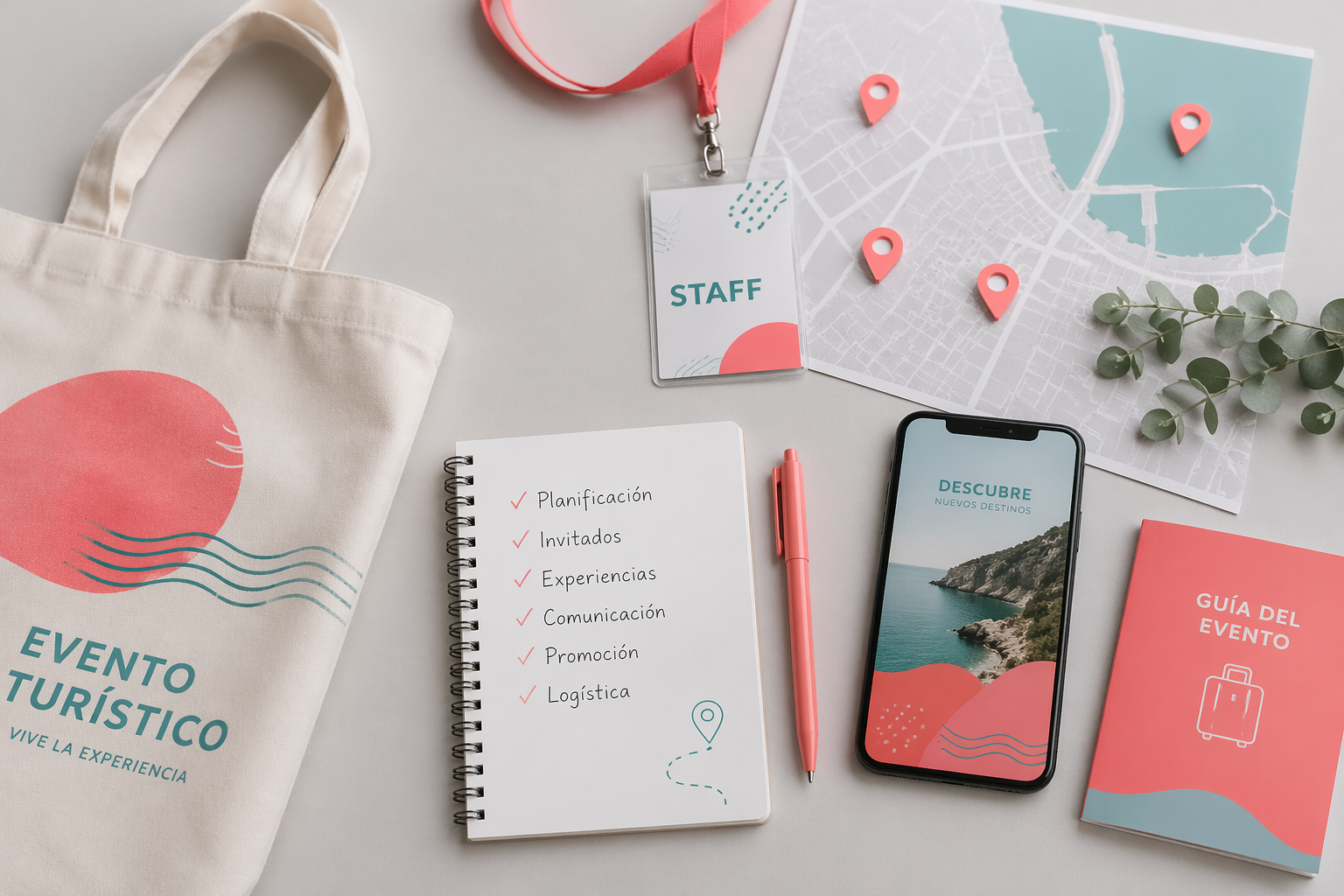
Tourism event management is a strategic tool for destinations, companies and institutions seeking to attract visitors, boost the local economy and reinforce their brand image.
Gastronomic fairs, cultural festivals, congresses, thematic routes, sporting events or seasonal experiences are part of an increasingly professionalised industry, where it is essential to create a memorable experience that is well connected to the territory.
This type of event has a clear particularity compared to other formats: its objective is to generate tourist movement, not only to gather attendees. In other words, they attract people who travel, stay overnight, consume in local businesses and discover the destination. For this reason, international organisations such as UN Tourism highlight the value of tourism as an economic, social and cultural driver.
What are the tourism events?
Tourism events are activities designed to promote a destination or enrich its leisure and business offer. They can be aimed at the general public, such as popular festivals or festivals, or at professional profiles, such as congresses, conventions and meetings in the MICE sector (meetings, incentives, congresses and exhibitions).
Spain, for example, is one of the most important countries in the world in terms of meeting tourism thanks to its infrastructure, connectivity and organisational capacity.
Five key factors that differentiate this type of events
The management of tourism events requires a broader vision than that of a conventional event. In addition to what happens inside the venue, everything that goes on around it matters:
1. Impact on the destination
Accommodation, transport, catering, mobility and visitor services have to be coordinated. The event is part of a wider chain of services.
2. External projection
Many attendees travel from other cities or countries, so prior communication, practical information and online reputation are decisive.
3. De-seasonalisation
Many destinations use these events to attract visitors in the low season and maintain economic activity throughout the year.
4. Local identity
The event must connect with the culture, gastronomy, heritage or values of the place to differentiate itself from generic proposals.
5. Sustainability
There are increasing demands for energy efficiency, waste reduction, local suppliers and a positive legacy for the community.
The real challenge: coordinating many pieces at once
A tourism event requires logistical planning, technical production, permits, security, marketing, user experience and relations with public institutions and private companies, among other things. In addition, its impact must be measured: attendance, hotel occupancy, media notoriety, economic return or brand positioning.
As a result, many companies find that organising the event is only part of the job and that the real challenge is to make it work and generate measurable results.
And what do communication agencies bring to the table?
Agencies turn the event into a strategic opportunity, as we contribute:
- Creative conceptualisation to give the event its own identity.
- Liaising with the media to achieve real coverage before, during and after.
- Convening of influencers, press and relevant opinion leaders.
- Brand narrative management, so that every detail is coherent.
- Digital content plan for networks, video, streaming and social media.
- Reputational and crisis management, essential for events with high public exposure.
- Measuring results beyond attendance.
Tourism event management needs professionals capable of combining logistics, experience and communication. Today, the winners are the experiences that best connect with people and leave their mark on each destination.


 English (UK)
  Español
  Português